Blog #4: I thought I knew my body pretty well

Blog #4: I thought I knew my body pretty well

BLOG #4 I thought I knew my body pretty well, but there is still a lot to learn

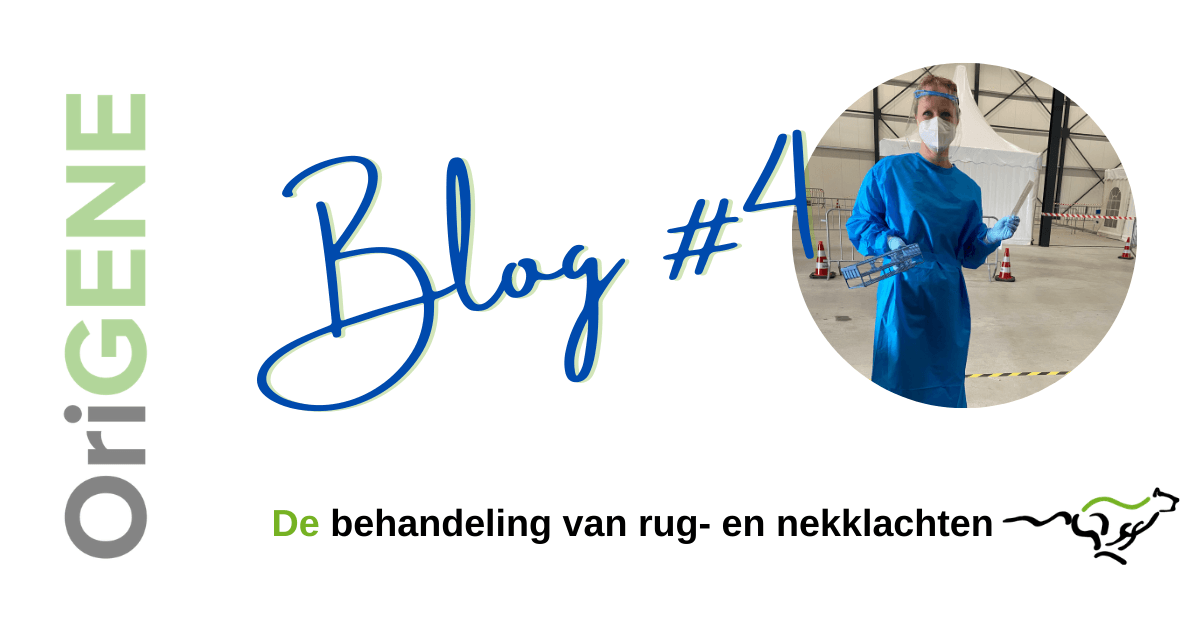
Last week was a bit quieter at the test lines and so I did a bit more office work. On the one hand, it's nice that I am less physically busy, but I do notice that I get more complaints when I sit for longer periods in a row. Apparently, I thrive on exercise, so I have to stay sharp on that. So now I regularly take a walk through the almost empty offices and work standing up now and again.

Meanwhile, I have completed my 5e and 6e OriGENE treatment and it went a lot better again. I managed to push away some more weight and I am so happy that I managed to build up further. It gives confidence and literally strength that I know and feel that my back really can handle more than I sometimes think. The fear of the pain is getting more in the background so I do and dare more and more. I now know that my back is getting stronger and that I can just use this strength during the day. I am now learning that my back pain is mainly due to muscles that have not been trained properly, i.e. precisely due to underuse rather than overuse. When you start exercising abdominal muscles, you get abdominal pain from that too, so the fact that I have some back pain again after a build-up of OriGENE treatment is not so strange. I thought I knew my body pretty well but there is still a lot to learn.
Read all of Sanne's blogs here

Most heard results

Stronger and more mobile back

No more back pain during or after strenuous efforts such as competitions and training sessions

Increase in all-round strength in lifts

Increase in jumping power

Increase in jumping power Improved coordination

Increase in trunk stability

Improved stamina and reduced back fatigue

Frequently asked questions

Below is an overview of frequently asked questions. If your question is not listed or if it is not sufficiently answered, you can always contact us.

What to do about back pain?

A lot of scientific research has been done on this question and the only thing that has been proven to help is exercise therapy, in other words moving of and with the back. By this we mean moving in such a way that all the back's capabilities and functions are activated through healthy and varied movement. The OriGENE method helps to ensure that your back gets the movement and variety it needs to recover, regain and stay healthy. Click here for further information

Varied movement and avoiding or breaking through prolonged static (sitting or standing) or frequently repeated movements (especially bending) will help you build up too much tension in the back muscles. If you have back pain, it is advisable to contact a physiotherapist to make a plan together with sufficient exercise and rest to make a sustainable recovery. OriGENE is often used by physiotherapists to help people effectively recover from their back pain. Click here for further information

“Going through the back” involves total or localised cramping of the muscles in your back. Some causes for this may include lifting too heavy a load, sitting/standing in the same position for too long or making a movement that the body had not seen coming. It can also stem from a period of stress and fatigue. 

In order to recover, it is important that your body learns again that it is safe to move, and the best way to do this is to move the muscles slowly over their function, calmly and with full attention. This involves respecting the limits your body indicates. That way, your brain sends a signal that moving is safe again, which will gradually make the cramping disappear. Click here for more information.   

Back lumbago involves total or localised cramping of all the muscles of the (lower) back. As a result, people often cannot move much, if at all, without feeling pain. Lumbago usually results from (long-term) overexertion or an acute moment when you make a movement that the body saw as dangerous or unexpected. In the process, all the muscles in your back tighten to protect you from danger or damage. It can also stem from a period of stress and fatigue. 

Lumbago usually lasts between three days and two weeks. After that, most people are able to resume most of their activities. Depending on how you deal with it and how much time you take to let your body recover, the duration can also be shorter or longer.

Because lumbago involves total or localised cramping, it is good to alternate rest periods with movement specifically where the cramping is. It is advisable to make an exercise and recovery plan with the physiotherapist so that you maintain the right movements and intensity. And remember that the physiotherapist helps you, but your body is leading in what it needs. It is up to you to learn to recognise and acknowledge the signals. Many people learn this during a period of back pain and come back more aware and stronger as a result. Click here for more information.

Which exercises you can do to get rid of your lower back pain depends on the phase and nature of your symptoms. In the acute phase, you mostly make smaller movements and slowly, respecting the limits your body indicates, try to regain more and more pain-free range of motion. Later in the course, you want to make sure the functions of your back muscles are restored and further optimised to make sure it doesn't happen again. That's why it's good to make a plan with your physiotherapist to not only recover from the symptoms but also become stronger and healthier in the long term. OriGENE has been helping both physiotherapists and clients achieve that goal for over 20 years.           
See further our (homework exercises) to see what you can do at home.

OriGENE trains all muscles of the spine and abdominal region that play an active role in the flexion and extension direction. The aim is to remove restrictions and blockages, restore the client's confidence and autonomy, and restore and optimise the total chain of movement and functions of the spine in flexion and extension direction. The functions and limitations of the muscles making rotation and lateroflexion are not specifically trained over that direction through OriGENE, but often we see these functions restored (fully) by making flexion and extension. In some cases, it can certainly be rewarding to functionally add further exercises such as rotation to achieve the desired end result of the client's load capacity.

No, OriGENE is a Dutch company and the method was conceived and developed here under the guidance of sports doctor Dr Frank Bertina. The OriGENE devices are produced with typically Dutch craftsmanship in Rotterdam. The office is located in Breda.

Back pain has many causes. For example, after an earlier herniated disc. But also after going through your back or after acute lumbago. The pain often persists for weeks. OriGENE treatment offers a solution. Do you have symptoms called chronic intermittent? Then your back has been bothering you for years, sometimes more, sometimes less. Even then OriGENE is there for you! 
Meanwhile, incidental favourable experiences have also been gained with complaints such as hamstring and groin injuries, pelvic problems, neck pain and related headaches. Are you a rheumatic patient or do you suffer from Bechterew's or Scheuermann's disease? Outside the acute phase, you too can respond well to OriGENE therapy. Read more here (link to patients' page)

OriGENE treatment is not intended for people with back pain due to specific back abnormalities, such as a herniated disc, which is so severe that it requires surgery; severe stenosis, e.g. due to vertebrae slipping to a great extent; certain rheumatic disorders; severe trauma, such as a fracture; some severe growth disorders; the effects of severe osteoporosis; metastases in vertebrae from cancer elsewhere in the body.
For a number of people, OriGENE treatment is not advisable or may even be dangerous because of the physical strain. These may be people with various syndromes that cannot be adequately controlled with medication or other aids. Think of heart disease, such as angina pectoris; high blood pressure; diabetes; falling illness; active rheumatism; severe neurological degenerative diseases, such as multiple sclerosis; strong disorders of blood clotting. In people with inguinal hernia or other abdominal wall hernia, if pressing or applying force causes an increase in symptoms, treatment is not recommended.

Want to know more? Get in touch with us

Contact us