The back can be a source of misery for many people. A sudden shooting pain, a nagging feeling in the lower back. Suddenly unable to get up after being bent over. These are complaints that are common. As many as 75% of Dutch people suffer from them. The cause of these complaints can be very different. The back is very complex in composition and there are many structures such as nerves, ligaments, fascia, nerves and muscles that may be involved in the pain experienced.
The structure of the spine
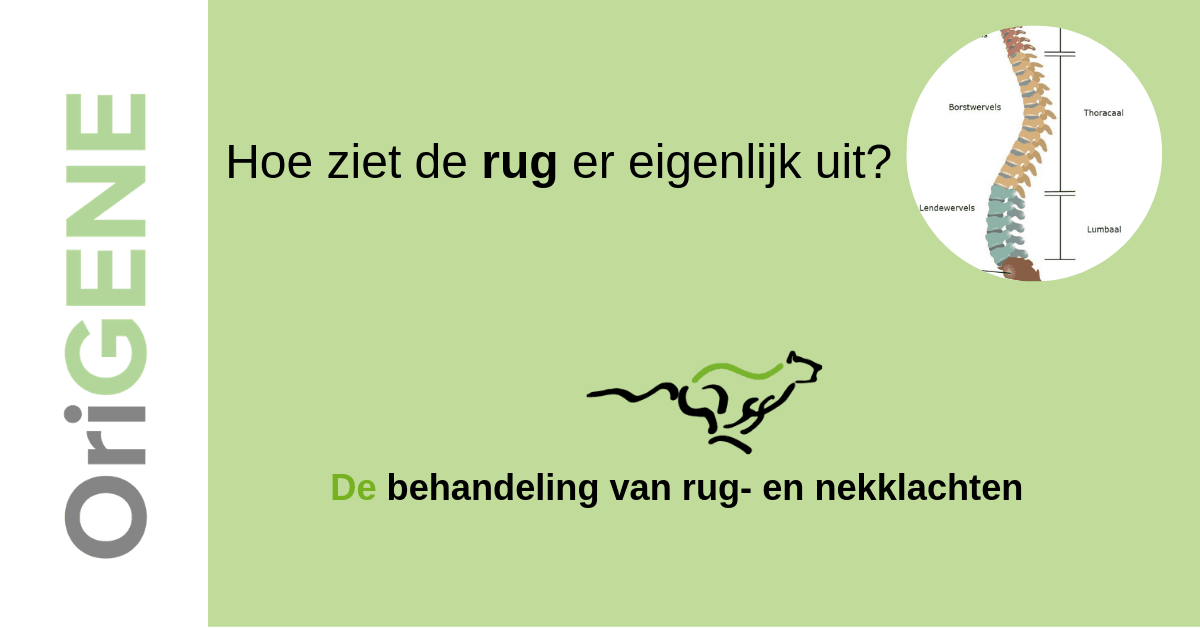
- C1-C7: these are the cervical vertebrae (cervical portion). The upper cervical vertebra is called ‘Atlas’ and it carries the head and allows you to nod your head, the yes movement. The second cervical vertebra is called ‘Turner’ (Axis) and it ensures that we can shake the head, the no movement.
- T1-T12: these are the 12 thoracic vertebrae (upper back, dorsal or thoracic). The vertebrae are connected by 12 ribs. These protect many important organs such as the lungs and heart.
- L1-L5: these are the lumbar vertebrae (lower back, lumbar region). The lumbar vertebrae are the largest and strongest bones in the spine and they support the body.
- S1-S3/S5: this is the sacrum. These are fused vertebrae. It protects the organs in the pelvis.
- Finally, the tailbone (coccyx). This is 4 fused vertebrae and it hangs from the sacrum.
From the side, the spine has an S-curve. This is designed to absorb shocks that occur during movement so that they do not penetrate to the brain. The degree to which the vertebrae can move in relation to each other allows the shock absorbing function to be optimised. The intervertebral discs located between the vertebrae also play a major role in this.
Are you experiencing symptoms of your neck or back? If so, please contact OriGENE practitioner in your area for more information.